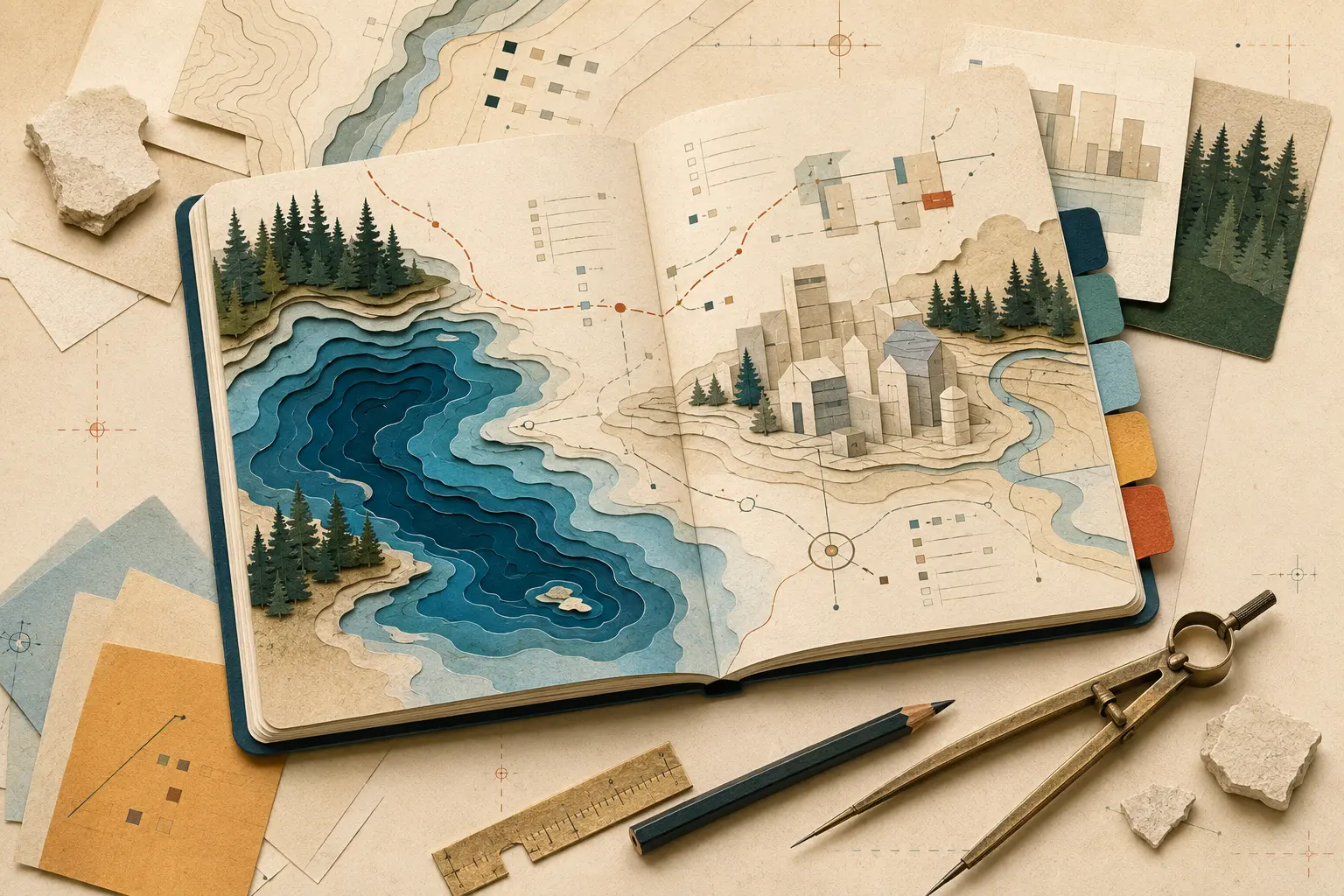
Wisconsin is a Great Lakes and Mississippi River state whose contemporary identity is shaped by cities, manufacturing, agriculture, public institutions, 72 counties and 11 federally recognized Tribal Nations.
- 01
Water is structure
Lake Michigan, Lake Superior, the Mississippi River and thousands of inland waters shape travel, settlement, work and recreation.
- 02
The north and southwest break the flat-Midwest idea
Glaciated lake country, unglaciated Driftless ridges, Great Lakes shorelines and urban corridors create distinct regional worlds.
- 03
Statehood came in 1848
Wisconsin entered the Union as the 30th state on May 29, 1848, after territorial debate and a second constitutional convention.
- 04
Tribal Nations are present governments
Wisconsin state agencies work government-to-government with 11 federally recognized Tribal Nations. Each Nation defines its own community, lands and visitor guidance.
- 05
Making things remains central
Manufacturing, agriculture, research, health care, paper, craft and technology all belong in a modern account of Wisconsin.
Common mistakes
- Reducing the state to cheese, beer or one sports team
- Treating Tribal Nations as history rather than sovereign contemporary communities
- Assuming every region shares one climate or pace
Take-it-with-you checklist
- 72 counties
- Two Great Lakes
- 30th state
- Statehood: May 29, 1848
- 11 federally recognized Tribal Nations
- Capital: Madison
- Largest city: Milwaukee